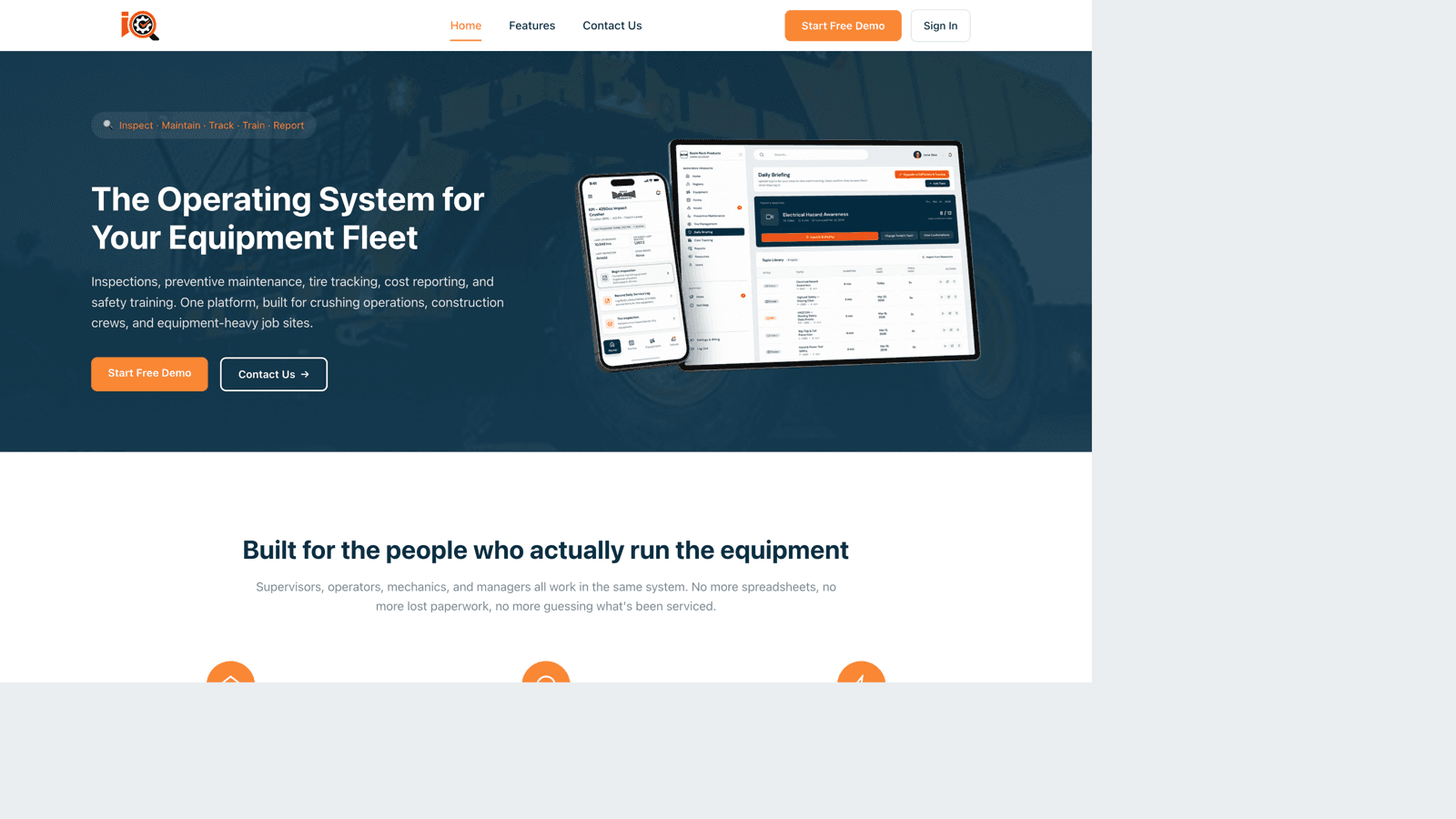
Web development notes for TotalEquipIQ
How TotalEquipIQ puts inspections, maintenance, costs, and training in one web product for crews who run equipment in the field.
Context
TotalEquipIQ is a fleet product for crushing operations, construction crews, and equipment-heavy sites. Inspections, preventive maintenance, tire tracking, cost reporting, and safety training live in one place so supervisors, operators, and mechanics are not split across spreadsheets and notebooks.
Problem
Paper and scattered files lose inspections before anyone acts on them. Problems show up late, equipment records sit in one place and costs in another, and managers cannot see which assets are due for service or what they cost to keep running.
Users & goals
Operators need a fast inspection they can finish on a phone. Mechanics need to see what service is due and log work against the right asset. Managers and safety leads need reports, an audit trail, and training records that tie back to a person, a time, and a machine.
Approach
I build the web application as production web development: shared interface patterns for forms, tables, and filters, and field workflows that stay consistent across inspections, equipment records, maintenance, costs, and training. The public site at totalequipiq.com is the product front door.
Key decisions
A QR code on the machine opens the right form for that asset. Flagged inspection items become issues that route to the right person. Preventive maintenance, tires, costs, and safety training sit on the same equipment record so daily work and reporting use one source of truth.
Outcome
Crews run inspections, service, costs, and training in one product instead of reconciling paperwork after the fact. Every record can tie back to a user, a time, and an asset.
Stack
React, TypeScript, and AWS, with a shared component system for the screens supervisors, operators, and mechanics use together.